This post by apprentice Anila Nair is part of a pilot effort to share a review of every program we run, focusing on the skills and activities participants experienced at Wolf Camp.
As part of Wolf Camp’s effort to share a review of every program, here is a look back at the Wilderness Survival Craft week at Lake Sammamish, July 6-10, 2026. I came in as an apprentice, supporting the group alongside our lead instructor for the week, Jake Brunksocki. I have been backpacking for years, so I arrived expecting to be useful mostly as an extra pair of hands. I left having learned as much as any camper.
Mornings in the circle

Every day started the same way, with the whole camp in a circle with camp director Chris. There was music. There were announcements. There was the particular energy of a few dozen people deciding together what kind of day this was going to be. Instructors led stretches to close it out, and some mornings a camper led them instead, which tells you something about how this place works. By the time we broke into groups, the tone for the day was already set.
What struck me in those circles was how much of Wolf Camp rests on young shoulders. Instructors, apprentices, campers, all of them carrying real responsibility, and all of them rising to it. The camaraderie among the young staff was genuine, and the campers could see it. You could watch them working out that this was a thing a person could grow up to do.
Our lead instructor

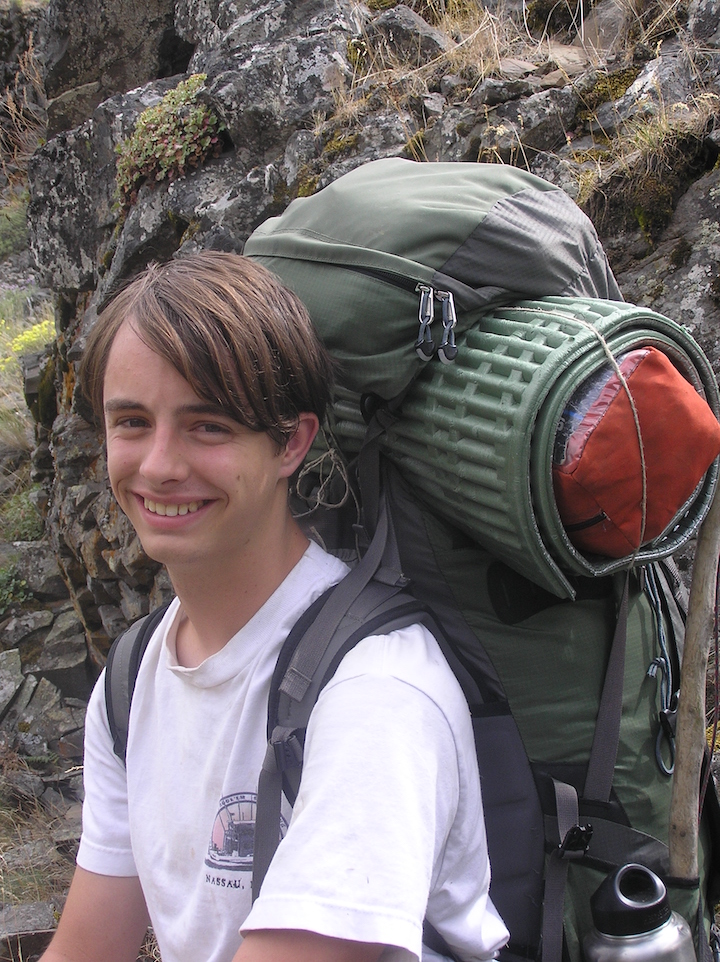
Our group’s lead instructor, Jake, was sixteen years old, and he ran that week with a steadiness I have seen in far more experienced adults. He set a theme for each day so the week’s plan unfolded in pieces the group could absorb, and he built in enough slack to read the room and change course when the mood called for it. Our campers were close in age but nowhere close in attention span or interest, and he met them where they were, every day, without losing the thread of what he was teaching.
Jake was also a born storyteller, which turns out to be an underrated wilderness skill. The stories carried the group through heat, tired legs, and the long stretch after lunch.
What I learned most from Jake was quieter than any technique. He genuinely loves being in the woods, and he taught the campers to settle, blend in, and watch rather than announce themselves. That patience is the thing most adults never learn, and he was teaching it at sixteen. I found myself hoping my own kids grow up with that kind of presence.
What we did

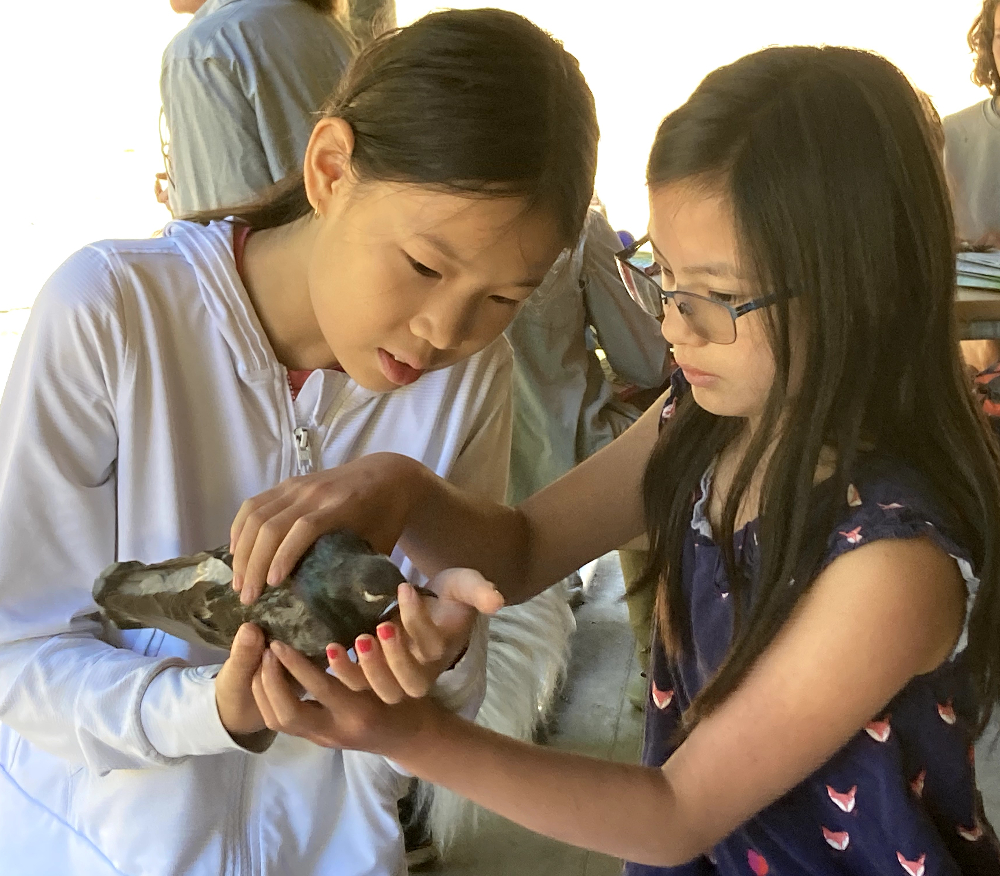
The week covered a lot of ground. Campers built shelters. We worked on animal tracking, reading what had moved through before we did. We harvested nettles and cooked with them. We went through the ten essentials of backpacking and talked about why each one earns its place in a pack. We worked on ten edible plants, on core survival skills, and on archery. And we spent unhurried time at the creek, where the only agenda was free play.

That mix of freedom and structure was, to my eye, the week’s real achievement. There was enough shape to keep everyone learning and enough room to let the day breathe.
Watching campers grow

By Friday, the change in the group was visible. The campers moved through the woods differently than they had on Monday, with more confidence, less hesitation, and a clear sense that they belonged out there. One camper in our group had filled out all of his own camp paperwork before arriving, and that self reliance showed up in everything he did that week.

The camp also made room for campers who needed more support, with additional apprentices assigned to stay alongside them. No one was turned away, and no one was left at the edge of the group. For a program built on independence in the outdoors, that inclusiveness is not a small thing.
The clearest measure of the week came at pickup. Almost every afternoon, campers did not want to leave when their parents arrived.
Artisan Camp, and next year
Running in parallel was Artisan Camp, led by some of the more seasoned instructors and apprentices, and it was a revelation. That group produced extraordinary work, including an animal hide smoked the traditional way. Artisan runs once a year as a week-long residential camp, and campers have to have completed other programs to qualify. I am hoping to shadow it next summer.
The evening circle
After campers went home, the staff gathered again. These evening circles were an honest, unguarded space to look at how the day had actually gone and what we would do differently tomorrow. Watching a team of mostly very young people reflect so openly, with Kim and Chris holding the space rather than directing it, explained a lot about why the camp runs the way it does. Kim and Chris are mentors to a great many young people here, and the effect of that is everywhere you look.
One more thing
I have a ten year old and an eight year old. I found Wolf Camp after I had already enrolled them elsewhere for the summer, which I regret more now than I did in June. They will be back for most of next summer’s weeks, and after assisting Jake at the wilderness survival camp, I know exactly why.
Discover more from Wolf Camp & School of Natural Science
Subscribe to get the latest posts sent to your email.